Mel One undertakes indoor and outdoor carpentry and general repairs for Brisbane homes and rental properties. Work includes timber windows, doors and hardware, eaves and fascia boards, cupboards and drawers, fences and gates, wall repairs and installations. We repair suitable existing items and replace damaged sections or complete items where needed. Send one job or a room-by-room property repair list.
Send the job details if the required work is not listed so the team can confirm whether it fits the current service scope.
Timber window and door repairs or replacement
Door handles, hinges, locks and sliding-door hardware
Sliding-door rollers, flyscreen mesh and screen-door repairs
Window or door glass and mirror replacement
Curtain and blind repairs, replacement and installation
Eaves, fascia boards and exterior timber repairs
Fence and gate repair or replacement
Cupboard hinges, drawer runners and handles
Shelving, fixtures, wall repairs and furniture assembly
Doors, timber windows and sliding hardware
We trace a sticking door to the leaf, frame, hinge fixings and latch contact before adjusting it. Sound timber and secure fixings may allow hinge or strike adjustment; split hinge support, decay or a distorted leaf can require a timber repair or replacement instead. A plain internal replacement door is measured to the actual opening, fitted with compatible hinges and the agreed handle or latch, then checked for clearance and reliable closing.
For a timber window, we separate a loose fitting from damaged sash or frame timber and check sill drainage and moisture around the opening. Local repair is considered only where the surrounding timber and fixing points can be retained. We protect glass and adjoining finishes, fit the agreed repair or replacement section, and prepare and coat exposed timber as specified without blocking drainage paths. Opening, closing and the repaired junctions are checked before the work is recorded.
Eaves, fascia boards and exterior timber
We identify the affected eaves, fascia or weatherboard runs and record the number, profile and dimensions of damaged sections. Moisture entry and adjoining timber are checked before deciding on a local repair or replacement. Soft timber, extensive rot or failed fixings cannot be made sound simply by covering them with filler; affected boards or supports may need replacement and further assessment.
We plan suitable access and protect the area below before removing unsound material. Matching replacement boards are fixed to suitable support, with roof edges and drainage details preserved. Agreed finishing includes removing loose coating, sanding sound edges, priming exposed timber and applying a compatible exterior coating system. The repaired runs, junctions and finish are recorded from a safe position; initial enquiry photos can be taken from ground level.
Fence and gate repairs or replacement
For a timber fence or gate, we check boards, rails, post condition and the hinge and latch fixing points together. A dragging gate may need adjustment, compatible hardware or repair of sound timber around a fixing; a leaning or decayed post can require replacement instead. We establish the affected lengths and whether the existing gate or fence section can be retained before taking it apart.
A metal gate is assessed separately: hinge wear, gate sag, post or pillar fixings and strike contact are checked before hardware adjustment or replacement is agreed. We protect nearby surfaces, carry out the confirmed fixing or material repair, and keep moving parts and latch contact clear of filler or coating. Timber repairs receive the agreed preparation and compatible finish; metalwork has its own preparation and coating requirements. Final checks follow the gate through its swing and latch operation, with the retained and replaced parts recorded.
Cupboard doors, drawers and fittings
For a sagging cupboard door or sticking drawer, we check the hinge plates, screw-holding material, runner type and cabinet alignment before adjusting the fitting. A loose screw in sound material differs from a broken hinge cup or swollen board. We protect the benchtop and surrounding faces, repair a suitable fixing point or fit compatible replacement hardware, then adjust door gaps and drawer travel.
Retained laminate, veneer or factory-finished faces are not treated like bare timber for sanding. Where an edge, panel or painted timber part needs repair, the agreed method and finish must suit that material and any visible colour difference is discussed. Each repaired door and drawer is opened, closed and checked for clearance, alignment and secure handles; the replacement fittings are recorded.
Shelving, fixtures and furniture assembly
We measure the shelf or fixture location, check the product, intended load and available fixing surface, and identify concealed-service risks before drilling. Suitable brackets and fixings are selected for that substrate; weak lining alone is not treated as a secure fixing point. Floors and furniture are protected while the agreed shelves, rods or furniture are assembled, levelled and fixed.
Any agreed wall holes or trim damage are made good after fixing, with sanding, primer and paint appropriate to the retained surface. Local touch-up and a full wall repaint produce different finish boundaries. We check the installation for level, secure fixings, clearance and normal use, and record the completed items rather than assuming a coating hides an insecure fixing.
One property, several repairs
List the jobs by room or outdoor area, such as a sticking front door, kitchen drawer repair, damaged fascia and a gate replacement. Mark anything that affects access or prevents normal use of the property. This helps plan materials, visits and the order of work.
Mel One also undertakes whole-home, kitchen and bathroom renovations. Send the full project scope when repairs are part of a larger renovation; electrical, plumbing and waterproofing work are coordinated with the responsible trades.
Prepare your handyman repair list
Give the Brisbane suburb and identify each damaged item.
Provide an overall photo and a close-up where safe, with known product details.
State whether materials or replacement products are already available.
Explain access, parking, occupants and any finishing work you expect.
Door and gate site records
Locks, hinges and opening checks
These site recordings show gate hardware being operated and the condition around a timber door lock opening. The material, hardware and required finish help define adjustment, repair or replacement.
Operation check
Metal gate lock and latch check
The two recordings follow the metal gate through opening and latch operation, including a closer view of the key cylinder. These views locate the lock and strike contact for assessment alongside hinge movement, gate sag and post or pillar fixings. They are operation checks, not a before-and-after record of hinge repair or welding; the suitable adjustment or replacement follows inspection of the actual parts.
The video follows the retained timber-slat gate through its swing around the hinge hardware. The hinge-side fixing area, gate position and latch contact are assessed together: adjusting a sound fitting differs from replacing decayed timber or a moving post. The recording shows the opening check rather than a completed post replacement, timber repair or coating sequence.
The exposed lock opening and worn surface around retained fittings are visible on the timber door. This is the starting condition for checking how much sound timber remains around the fixing and whether a local repair can retain the door. Filling a shallow surface defect, repairing a sound split and replacing a weak lock-support area are different tasks. The video records this condition before a repair and finish are confirmed.
Send an overall photograph, close-ups of the affected hinge or latch and approximate dimensions. Tell us whether the opening currently closes and latches, which fittings should be retained and what finish is required.
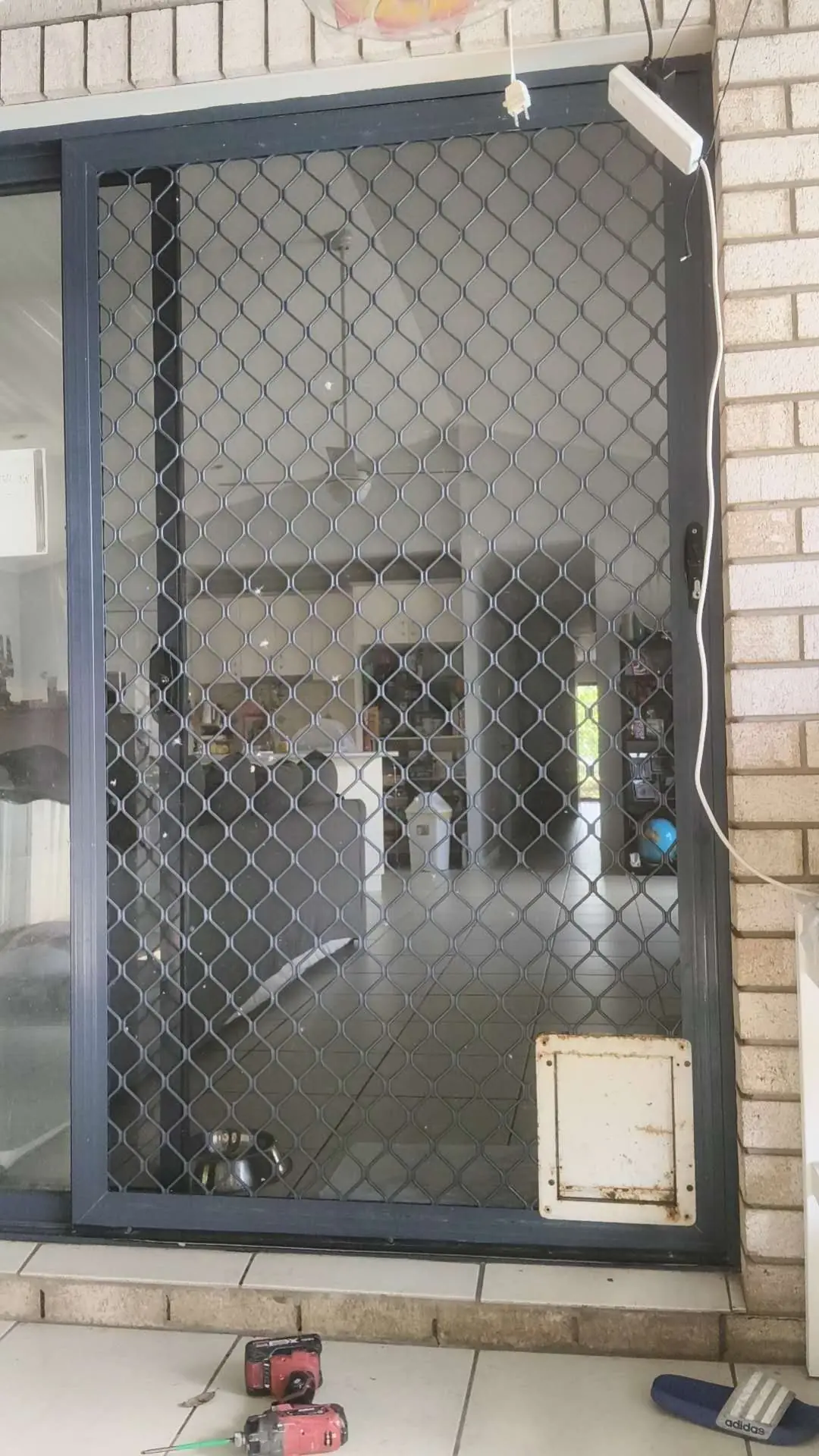
For a sliding screen door that sticks, drags or will not latch, send a whole-door photo plus close views of the track, handle and latch. Include any torn mesh and the property's suburb.
A short video showing the movement can help explain when the problem occurs. Rollers, mesh, hardware and the surrounding frame are assessed before the repair or replacement scope is confirmed.
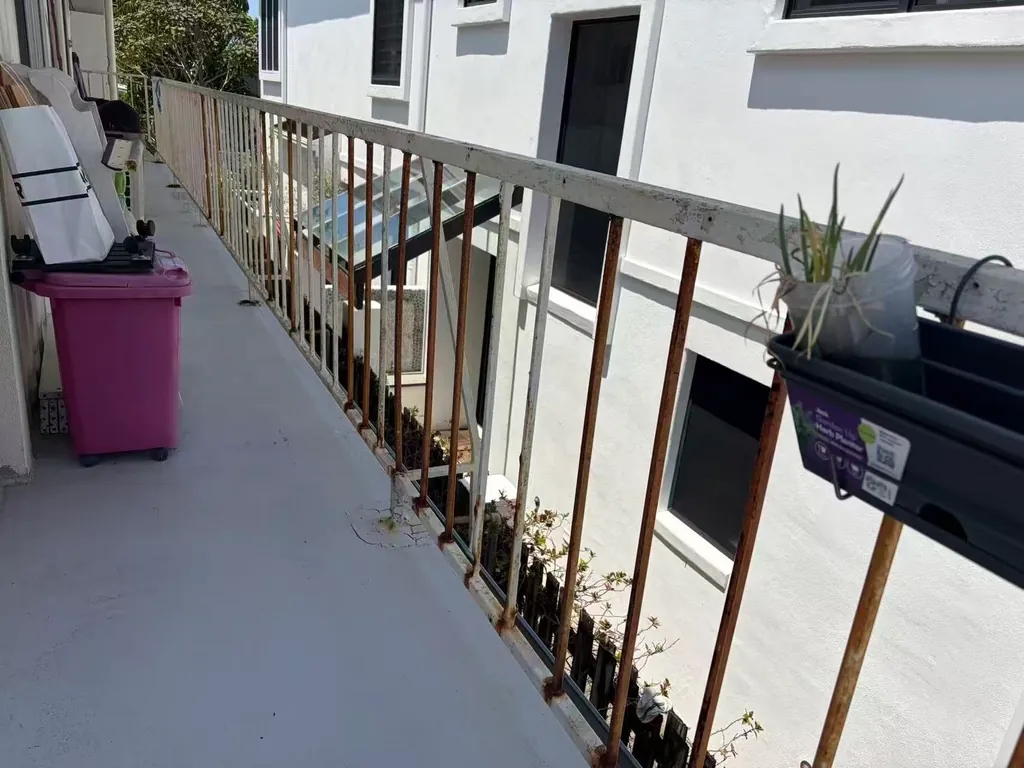
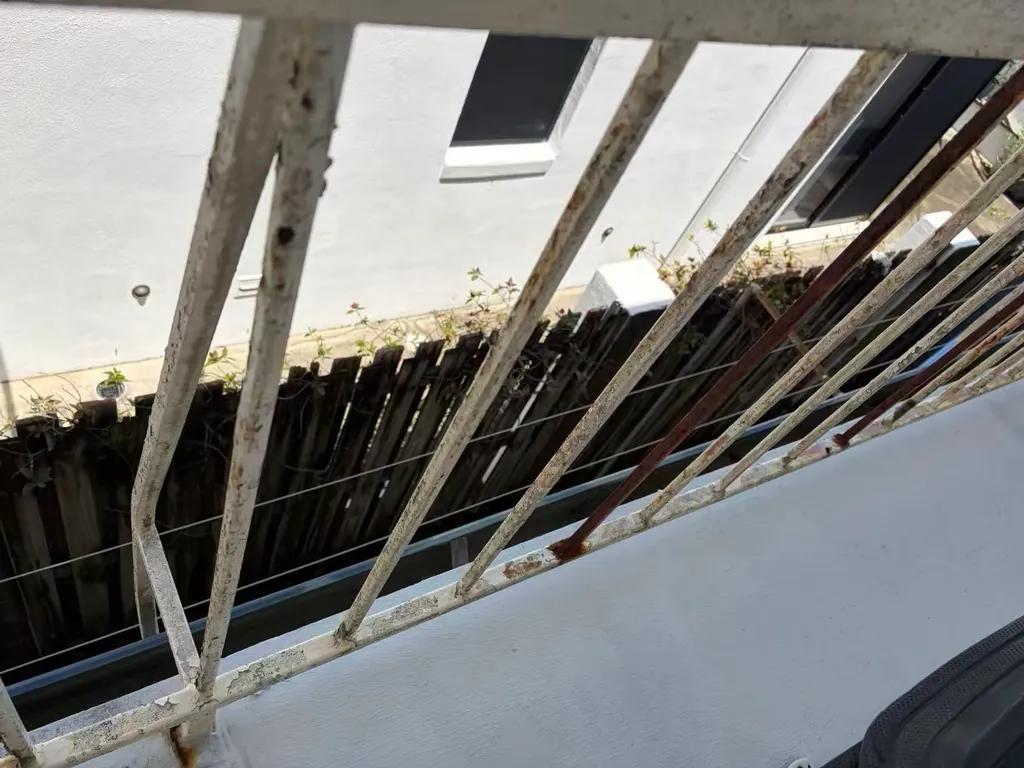
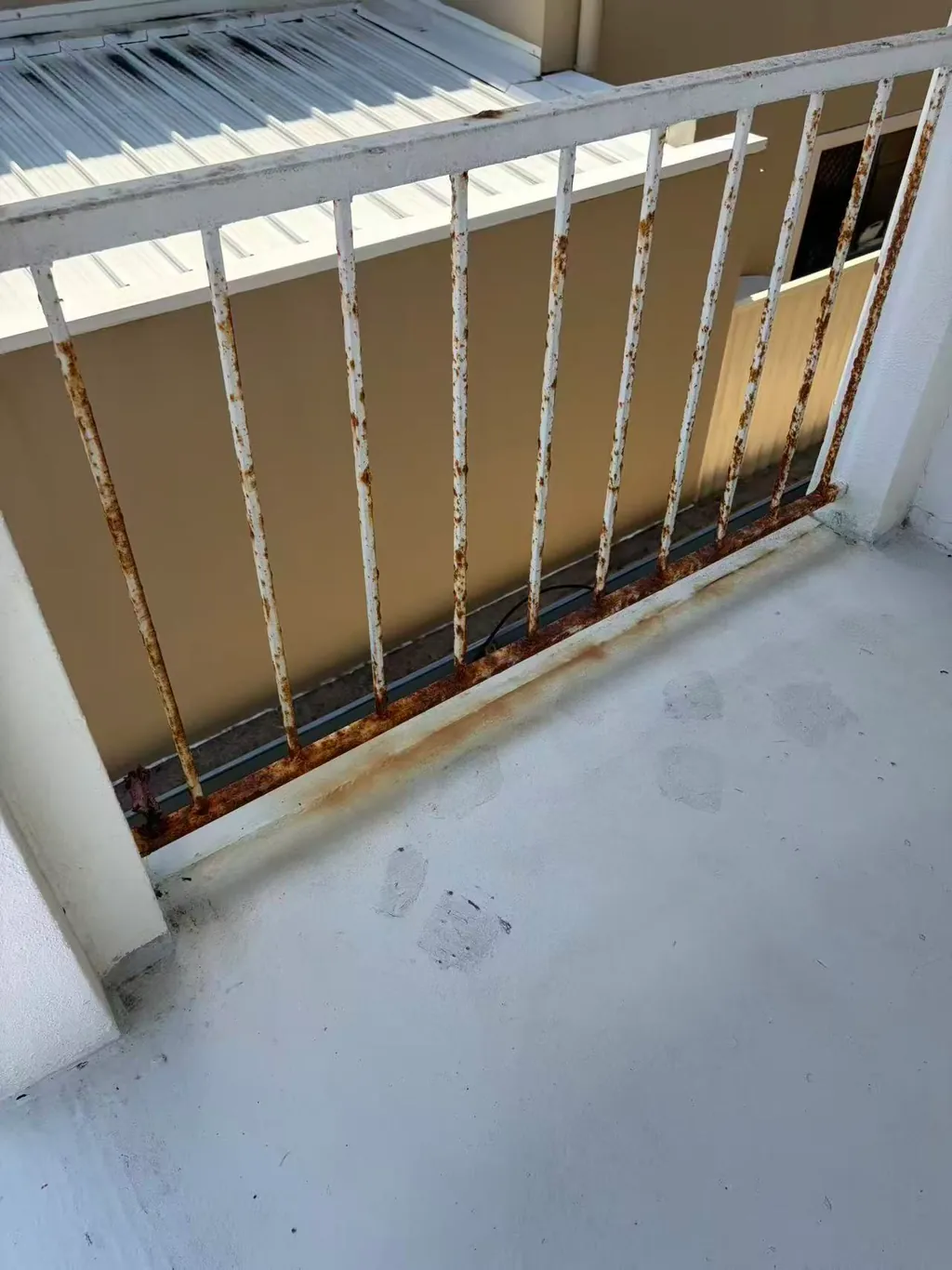
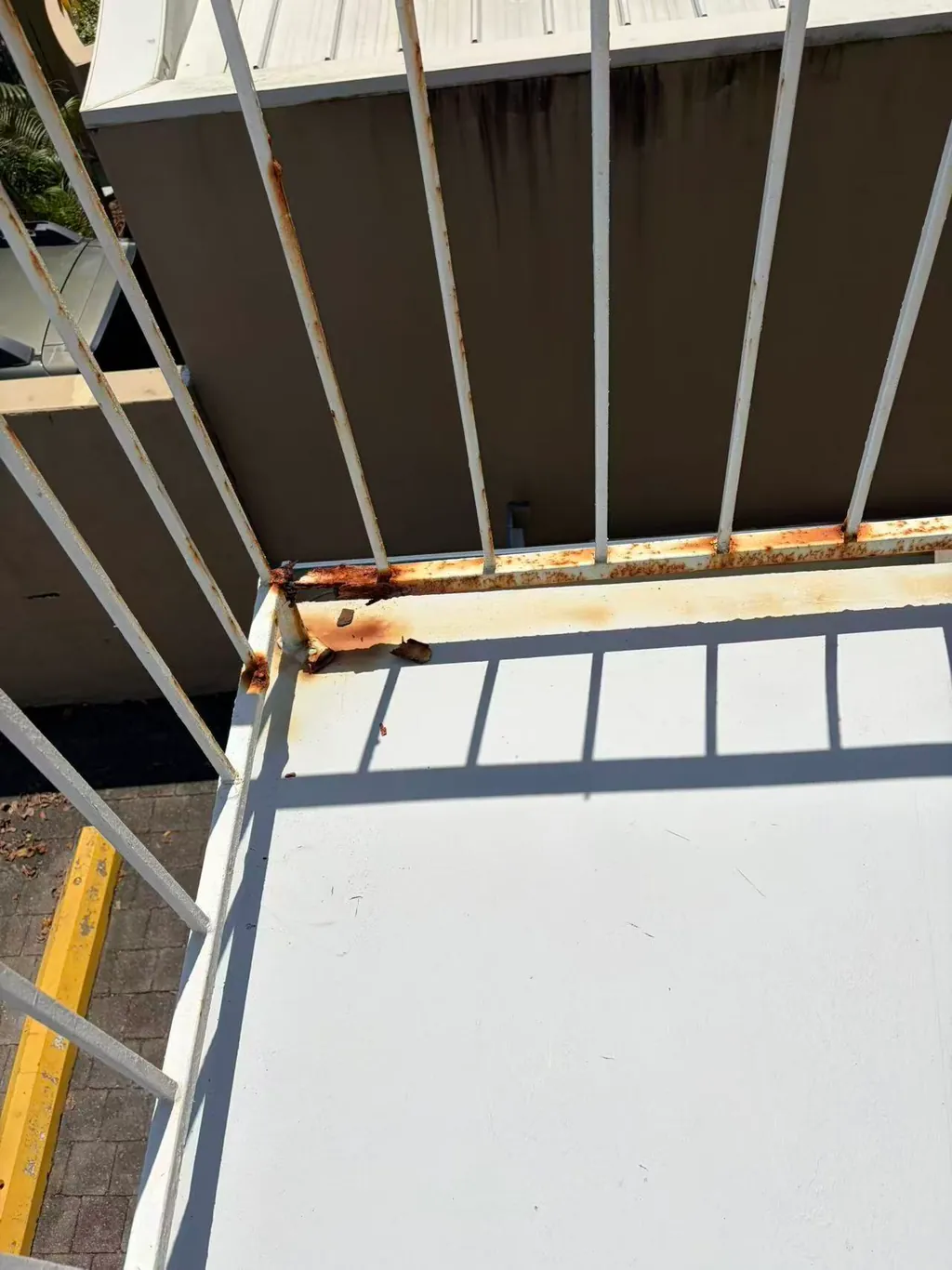
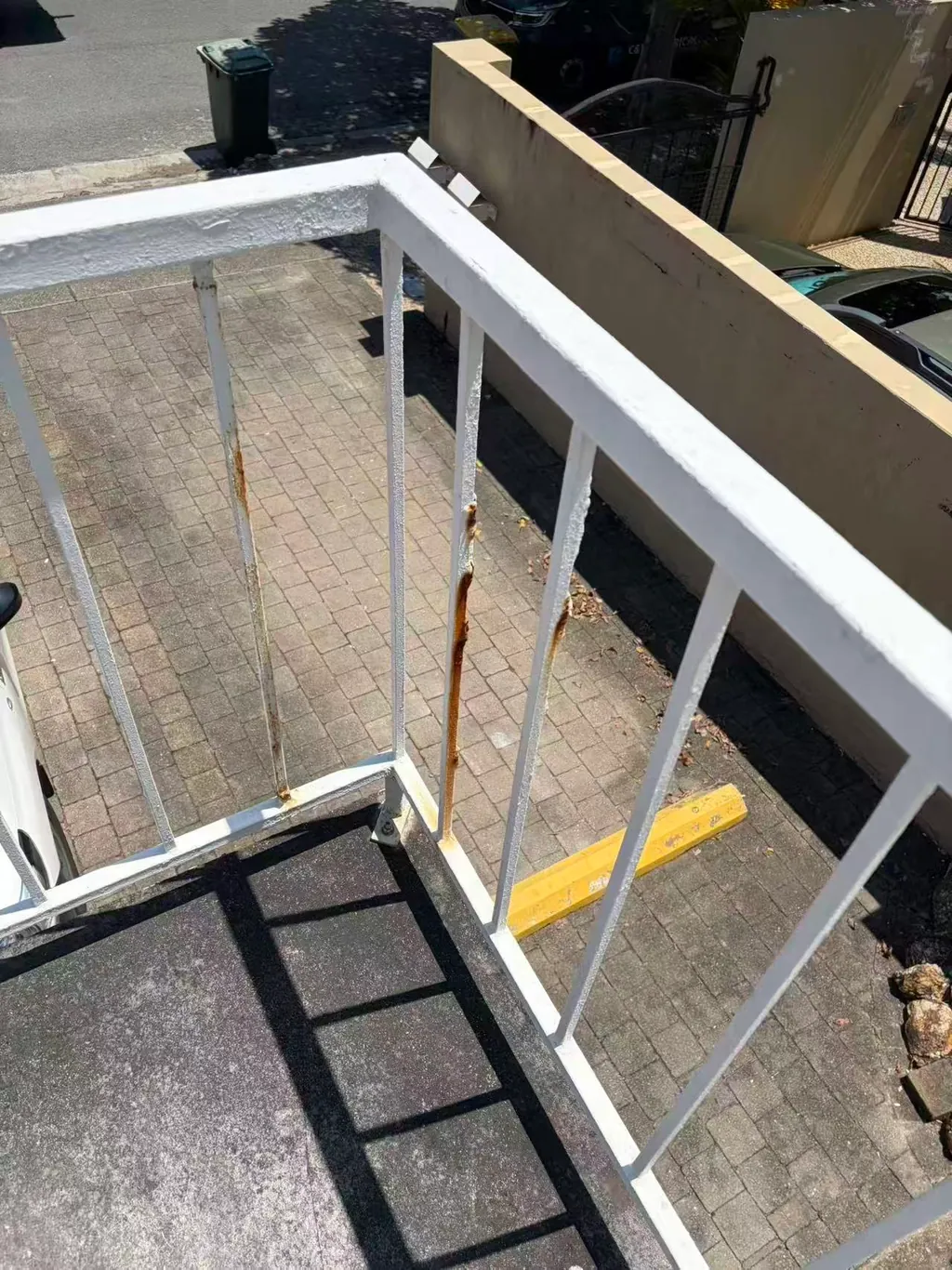
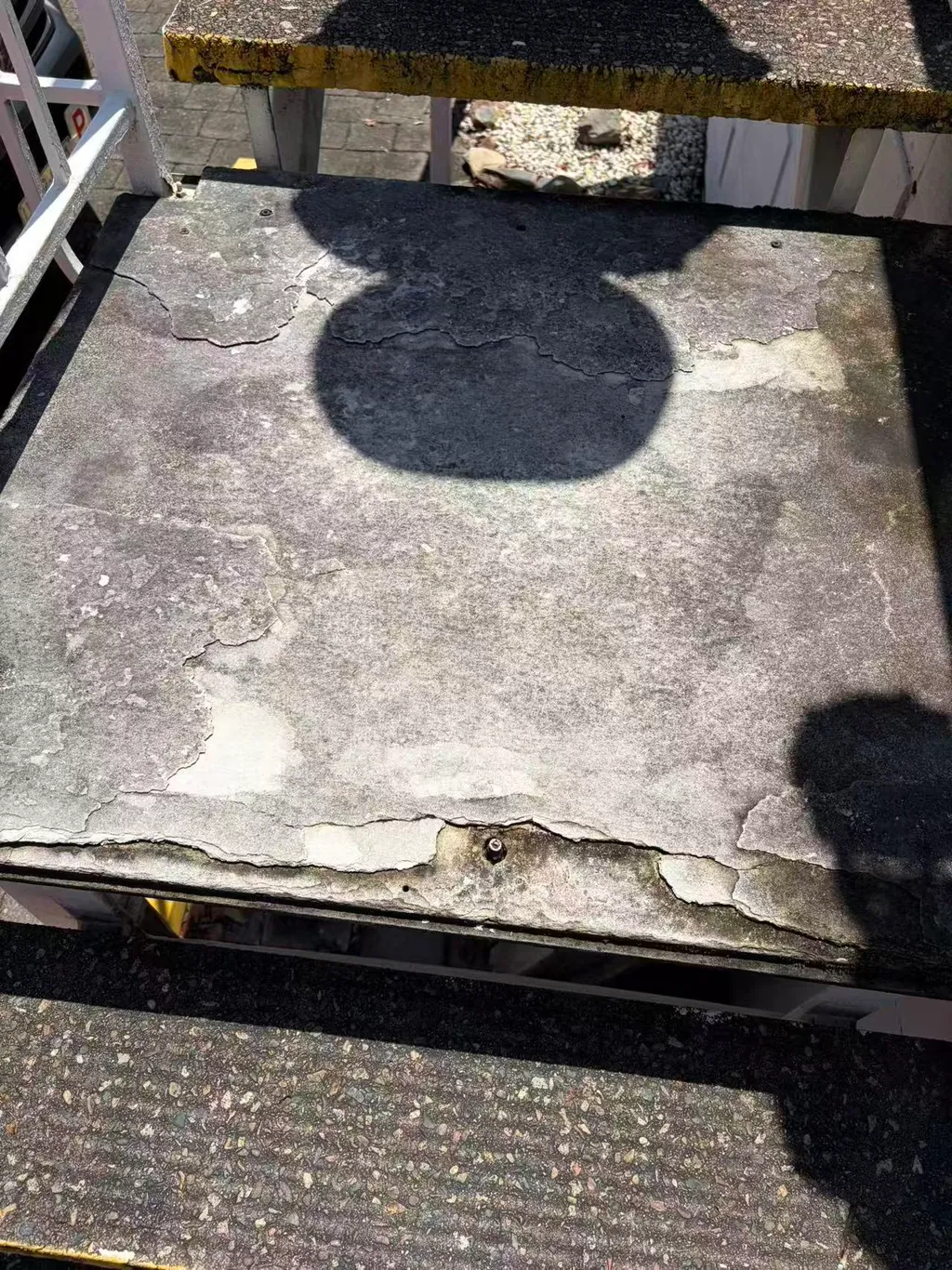
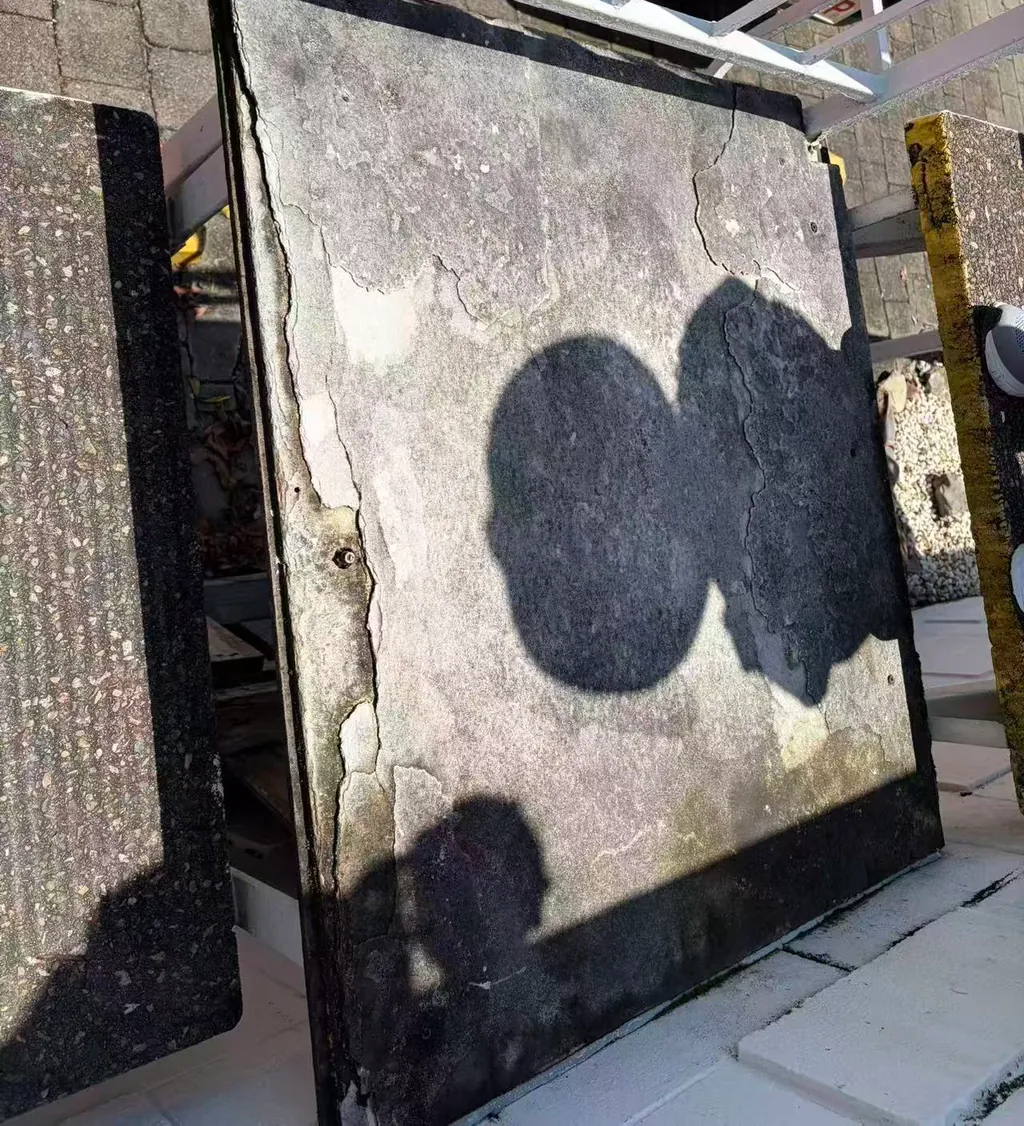
External stair landing and metal railing condition
These site photographs record cracking and peeling on an external landing surface, together with rust along painted metal railings, lower rails and corner joints. They show the existing condition and help identify the areas to assess.
Send an overview, close-ups of the affected areas, approximate dimensions and access details. Surface preparation, metal railing work and any landing repair need their scope checked together before a finish or repair approach is chosen.
The door closes but will not latch. Is the lock faulty or is the door out of position?
A door-position problem can stop a sound latch reaching its strike plate, so we check the hinges, fixing grip and gaps before choosing a new lock. The strike is the metal receiving plate on the frame. If lifting has changed the result during normal use, tell us: that is a useful alignment clue, rather than proof that the lock has failed.
We compare the handle and latch movement with the door open and closed, while checking any loose or damaged support. Smooth movement when open but resistance against the frame points towards the meeting position; resistance in both positions also calls for checking the mechanism and installation. Neither observation is a complete diagnosis. Once the door is supported correctly, a suitable strike adjustment or matched hardware replacement can be considered.
The quote separates support/fixing repairs, adjustment, any new hardware and finish repairs. Send the full door, the hinge side and the latch/strike area, and say whether it must stay secure. If this is a labelled fire door or shared-building entrance, include that information and the management contact before any alteration is agreed.
The flyscreen mesh is torn but the frame looks good. Can the frame stay?
Yes, ordinary insect-screen mesh can be replaced while keeping a frame that is straight, firmly joined and able to hold the retaining cord, called the spline. We also check that the screen can be removed and refitted correctly. A sound-looking edge alone does not establish that the corners, spline groove and sliding hardware are all serviceable.
If only the mesh has failed, the scope is removal of the old mesh and spline as needed, suitable mesh selection, re-meshing and refitting. A bent frame, broken corner, worn roller or damaged retaining channel is separately assessed; pulling new mesh tight will not correct those faults. Certified security screens and screens serving a specified protection function need their own system requirements checked before any substitution.
Cost depends on screen count and size, mesh type, access and any frame or hardware work. Send one full screen photo and a close-up of the tear and corners, identify window or sliding door, and give approximate size. Tell us if pet resistance is wanted or if there is a visible product label; do not buy mesh or remove fixed security fittings solely from appearance.
What do you need to know before hanging a large mirror, shelf or wall-mounted fitting?
We can assess installation of suitable mirrors, shelving and fixtures once the product's mounting requirements and the wall's support are clear. Give us the item dimensions, its weight or model, a photo of the supplied hanging points or brackets, and where it should sit. For a shelf, tell us what it will hold; the empty shelf weight is only part of the load.
Plasterboard, masonry and a tiled wall need different checks. We establish the actual wall material, sound support, available cavity or member positions, and the condition of any existing holes. Tiles are a surface finish and do not identify the support behind them. The fixing layout and chosen anchor must suit both the product instructions and the actual wall; a universal screw or kilogram rating would not establish that.
We agree the position, check the drilling area for relevant concealed services, select the fixing arrangement and install the item using its intended mounting points. Damaged plasterboard, missing support or incompatible brackets can mean repairing the wall, adding an agreed mounting detail or changing the position before hanging. Old holes, paint touch-up and any visible mounting board are discussed as finishing items.
The quote can include positioning and installation labour, fixings or additional support, handling a large item, stairs and access, removal of the old item and the agreed cleanup. Send only the relevant wall and product photos; you do not need to open the wall yourself.
A sliding door that becomes hard to push again does not automatically need another set of rollers. We first distinguish dirt and rubbing from worn hardware, a damaged track or an unsuitable replacement part. The useful question is what is resisting the door now, and whether the retained panel, track and fixings can work together properly.
A crooked door or troublesome drawer can often be approached as a local repair when the cabinet and fixing areas remain sound and suitable hardware can be fitted. We separate the moving part from its support: adjusting a hinge, replacing a drawer runner — the sliding rail mechanism — and repairing a damaged cabinet panel solve different problems.
A local timber repair can be suitable when the damage is limited, the retained timber and connections are sound, and the moisture problem can be addressed. We check the part's job before choosing a small repair, a replacement section or wider replacement.
You can enquire about one small job or send several jobs together. We can assess the list as one property enquiry, then confirm which items can share a visit and which need parts, drying time, another trade or a later stage.
General Handyman & Carpentry in Brisbane — common questions
Straight answers to the questions Brisbane homeowners ask most often before booking this job.
Can I book one repair or several jobs at the same property?+
Yes. Send one item or a room-by-room list. Mel One can coordinate doors, windows, cupboards, wall repairs and outdoor timber work, with materials, visits and finishing agreed for the full list.
Do you repair timber windows, eaves and fascia boards?+
Yes. We assess the damaged timber and adjoining material, then quote repair or replacement of the affected parts. Include any known leak or moisture issue and whether painting is required after the timber work.
Can you replace a whole fence as well as repair a section?+
Yes. Mel One undertakes fence and gate repairs and replacement. Send the material, approximate length, damaged parts, access details and desired finish so retained and replaced sections can be identified in the quote.
Can cupboard hinges and drawer runners be repaired?+
Yes. We adjust or replace cupboard hinges and handles, repair sticking drawers and drawer runners, and refit detached drawer fronts where the retained material is suitable. Damaged panels can be repaired or replaced as agreed. Send photographs of the fitting and the whole cupboard, and list the number of items affected.
Do you repair screens and replace glass or mirrors?+
Yes. We replace torn flyscreen mesh, refix loose screens, repair screen-door fittings and install replacement screens. Window or door glass and mirror replacement can also be arranged, with the dimensions, glazing specification, fixing method and access checked for the job. Sliding-door roller repair or replacement is available where worn rollers affect operation.
Can you repair curtains and blinds or install replacements?+
Yes. We repair or refix loose curtain rods and blind brackets, detached chains and damaged handles, and replace or install curtains and blinds. Motorised-blind faults are assessed for repair or replacement of compatible parts; any electrical work is carried out by the responsible licensed trade. Include the product type and the part that has stopped working.
Can you refix small household fittings?+
Yes. We install or refix towel rails, soap holders, shower rails, curtain rods and letterboxes, and replace clothesline cord. The wall or support, fixing condition and product are checked so the repair suits the item. These fittings can be included in the same list as door, cupboard or wall repairs.
Does carpentry repair include painting?+
Painting can be included in the agreed work. Specify whether you need the repaired timber finished, a whole wall repainted or a wider interior or exterior repaint. The quote lists preparation and the extent of painting.